

In our previous post, we explored the fascinating history of radiofrequency therapy, how pain medicine evolved from using heat to destroy nerves, to using electrical fields to gently modulate them. The pinnacle of this evolution is Transcutaneous Pulsed Radiofrequency (tPRF), a therapy that delivers these neuromodulating fields non-invasively, applied across the skin.

But when we throw around terms like “neuromodulation” and “transcutaneous,” it is easy for the actual science to get lost in medical jargon. How does an electrical field acting outside the body help relieve pain inside the body?

Let’s break down the basic scientific principles of tPRF and answer the most common questions we receive in the clinic.

The Science: How tPRF Works Through the Skin

To understand tPRF, we must look at how nerves communicate. When you experience chronic pain, your nerves are often trapped in a hyperactive state, sending continuous distress signals to the brain even when there is no active injury.

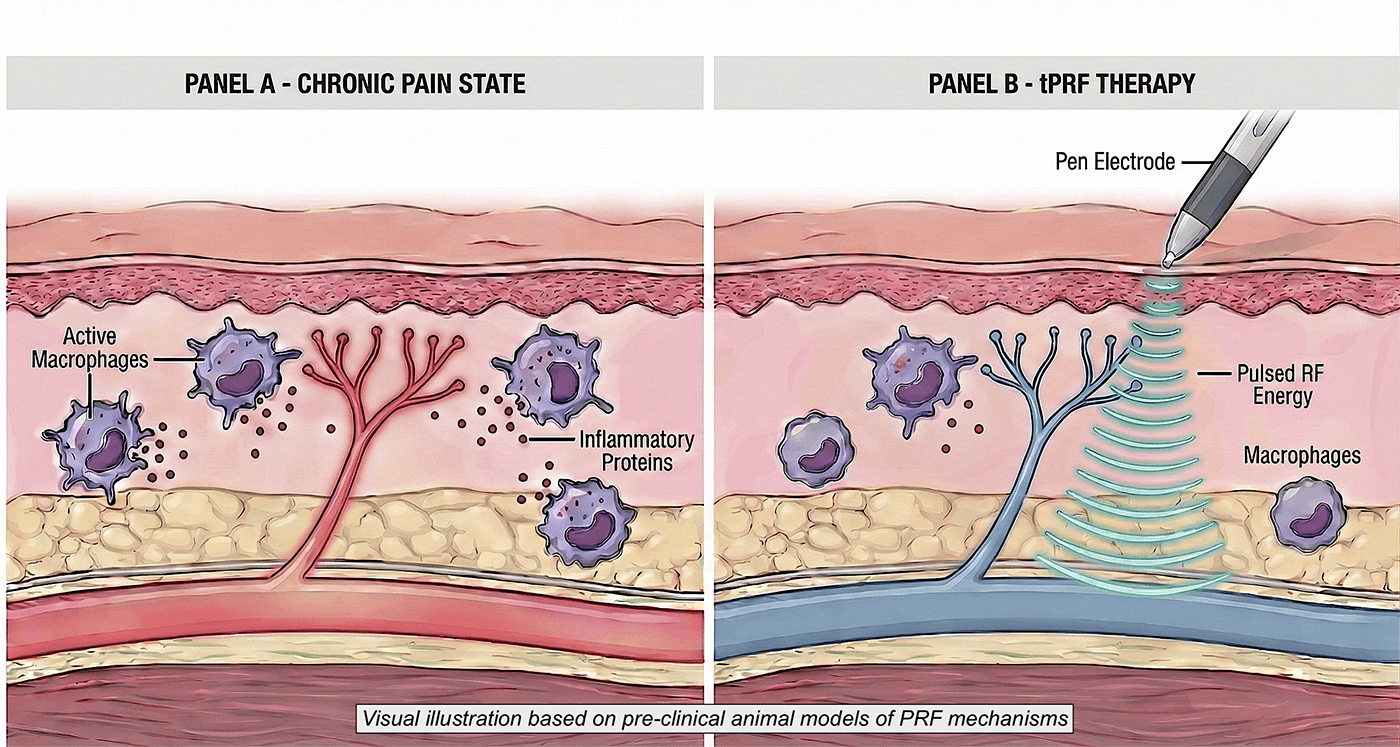
Traditional Pulsed Radiofrequency (PRF) uses a needle to deliver electromagnetic pulses directly to these irritated nerves. tPRF takes a different approach. Using specialized non-invasive delivery systems, tPRF generates a highly targeted electromagnetic field on the surface of the skin.

Here is what happens beneath the surface:

  • Reaching the Target: The pulsed radiofrequency wave is designed to penetrate the skin and reach the underlying peripheral nerves and tissue without losing its therapeutic potential.
  • Calming the Signals: Recent reviews (Sam et al., 2021) suggest that these pulsed electrical fields go to work at a cellular level. They modulate the activity of ion channels, helping to reduce the hyperactive communication between the nerve and the brain.
  • Quieting Local Inflammation: At the site of the peripheral nerve, chronic pain is often fueled by local immune cells like macrophages. When activated, they release inflammatory cytokines that constantly irritate the nerve. Recent breakthrough preclinical research published in Nature Scientific Reports (Yuba et al., 2025) demonstrated that pulsed radiofrequency therapy applied to peripheral nerves exerts a significant anti-inflammatory effect, significantly reducing the presence of these pro-inflammatory cytokines, reducing the number of macrophages, and helping to calm the local tissue environment.
  • Reversing the Central Cycle: This local calming effect also travels upstream to the Central Nervous System. Preclinical studies demonstrate that applying PRF to the peripheral nerve significantly reduces the activation of microglia, the specialized immune cells in the spinal cord that act as the central “engine” for chronic pain (Cho et al., 2013).
  • Long-Term Modulation: Exciting preclinical studies (including emerging data by Occhigrossi et al., 2026) even suggest that these therapies may influence pain pathways at an epigenetic level, meaning they might help alter how genes related to chronic pain express themselves over time.

By quieting the nerve, modulating both the local and central immune response, and delivering energy in brief bursts that prevent heat buildup, tPRF safely helps to interrupt the cycle of central sensitization. It is designed to offer cellular modulation and pain relief without the destructive consequences of older ablation therapies.


Your Top tPRF Questions, Answered

  1. Does tPRF therapy hurt? No. Because tPRF is non-invasive and does not rely on destructive heat or tissue ablation, it is generally very well tolerated. Most patients feel a mild tingling, pulsing, or tapping sensation over the treatment area, but it should not be painful. Because there are no needles involved, the anxiety and discomfort associated with injections are avoided.
  2. Who is a good candidate for this therapy? tPRF is primarily considered for individuals suffering from chronic, intractable nerve pain, or as an adjunctive treatment for post-surgical and acute post-traumatic pain. If you have tried traditional medications or physical therapy without success and want to avoid invasive procedures like surgery or needle-based ablations, tPRF may be an excellent option to discuss with your provider.
  3. Is it safe? Yes. tPRF is considered a highly safe, non-invasive procedure. Because the radiofrequency energy is delivered in “pulses,” the targeted tissue has time to dissipate heat and stays below destructive temperatures, mitigating the risk of thermal damage (burns) to the nerves or surrounding tissue. Furthermore, tPRF devices are regulated and FDA-cleared for pain management.
  4. How long does a session take, and when will I feel relief? Sessions are typically quite brief, often lasting only 5 to 15 minutes per targeted area, making it very easy to fit into your day. While some patients report feeling a difference after their first few sessions, neuromodulation is often cumulative. Your provider will design a specific treatment plan, usually involving multiple sessions over a few weeks, to help your nervous system work toward sustained relief.


References & Further Reading

For healthcare professionals and readers interested in the mechanisms of pulsed radiofrequency therapies, we recommend the following peer-reviewed literature:

  • Sam, J., Catapano, M., Sahni, S., Ma, F., Abd-Elsayed, A., & Visnjevac, O. (2021). Pulsed Radiofrequency in Interventional Pain Management: Cellular and Molecular Mechanisms of Action – An Update and Review. Pain Physician, 24(8), 525-532. PMID: 34793641 Free Full Text
  • Cho, H. K., Cho, Y. W., Kim, E. H., Sluijter, M. E., Hwang, S. J., & Ahn, S. H. (2013). Changes in pain behavior and glial activation in the spinal dorsal horn after pulsed radiofrequency current administration to the dorsal root ganglion in a rat model of lumbar disc herniation: laboratory investigation. Journal of Neurosurgery: Spine, 19(2), 256-263. PMID: 23746090
  • Yuba, T., Koyama, Y., Uematsu, H., Takahashi, A., Matsuda, Y., Fujino, Y., & Shimada, S. (2025). Elucidation of the treatment mechanism of pulsed radiofrequency based on its antiinflammatory effects. Scientific Reports, 15(1). PMID: 41023026 Free Full Text
  • Occhigrossi, F., Mosca, J., Micheli, F., Gazzeri, R., Robinson, C. L., & Lo Bianco, G. (2026). Pulsed radiofrequency and epigenetic modulation of pain pathways: A systematic review based on preclinical evidence. Journal of Pain Research, 19, 582117. PMID: 41737301 Free Full Text

Educational Disclaimer: This article is provided by Algiamed Technologies for general scientific and educational purposes only. It is intended to discuss the evolution and pre-clinical mechanisms of radiofrequency therapies. This information does not constitute medical advice, nor is it intended to promote the off-label use of any specific medical device. Patients should consult with their healthcare provider regarding appropriate treatment options.


Continue Learning About tPRF Therapy

Join Our Mailing List

Sign up to stay updated with our latest research, blogs, newsletters and events.