Join Our Mailing List
Sign up to stay updated with our latest research, blogs, newsletters and events.

CLINICAL SUPPORT FOR STIMPOD OWNERS
Get the Clinical Support You Need
Follow the right learning pathway, access the right resources, and get support after working through the core materials.
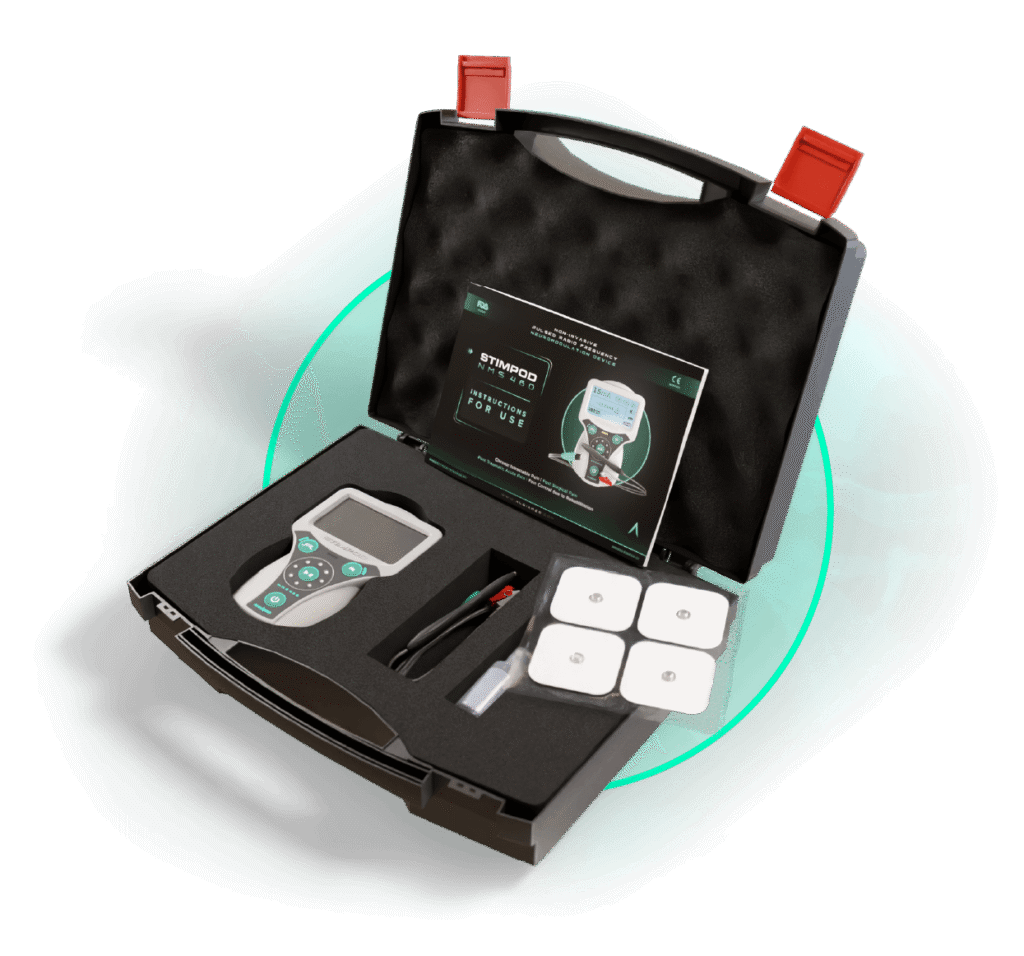
1. Before Your Stimpod Arrives
You can start learning before your device arrives. Use this time to prepare your knowledge and identify 2–3 suitable first patients to build confidence early.
Begin with the Online University and core getting-started resources.
Choose 2–3 straightforward cases to build confidence early.
Understand patient selection, nerve targeting, and treatment structure.
2. Start Here: Register and Begin Training
Build the training foundation before treating patients.
Review the quick-start guide, setup steps, and treatment preparation.
3. Understand the Science Behind Stimpod Therapy
Stimpod uses pulsed radiofrequency energy to support nerve remodelling and restore healthier signalling patterns
tPRF therapy delivers controlled bursts of radiofrequency energy to targeted nerves, influencing nerve function without creating destructive heat or damaging tissue. Rather than simply masking pain, it is designed to modulate abnormal nerve signalling at the source.
Stimpod uses targeted pulsed radiofrequency to influence nerve function directly, rather than relying on broad surface stimulation or temporary sensory distraction. This precision allows treatment to focus on the nerve behaviour driving the pain, supporting outcomes that can last beyond the treatment session.
Accurate nerve localisation helps ensure the treatment is delivered to the nerve involved in the pain, rather than broadly stimulating the surrounding area. By reaching the correct target, Stimpod can influence the source of abnormal signalling more precisely and support a more meaningful treatment response.
Painful Area → Relevant Nerve → Targeted Treatment
4. Find the Right Nerve
Stimpod uses pulsed radiofrequency energy to support nerve remodelling and restore healthier signalling patterns
Gather history and examine the pain presentation.
Use anatomy and palpation to identify the target.
Use anatomy and palpation to identify the target.
5. Plan Your First Treatments
Start with 2–3 straightforward cases and document response to build confidence and outcomes.
Choose appropriate candidates.
Localise the most likely nerve.
Apply Stimpod treatment per guide.
Track outcomes and refine your approach.
6. Explain Stimpod to Patients
Clear communication builds trust and improves outcomes
7. Build Your Stimpod Treatment Program
Turn Stimpod from a device into a structured clinical service in your practice.
Define who you treat and how you help them.
Build efficient steps from consult to treatment.
Measure what matters and track results.
Expand impact without adding complexity
8. Clinical Resources, Organised by Need
Essential setup and first steps with Stimpod.
Dive deeper into the science and mechanisms.
Guidance for accurate nerve localisation.
Condition-specific protocols and dosing guidance.
Handouts, scripts and guides for better conversations.
Solutions to common issues in practice.
Advanced learning and one-on-one support options.
9. Before You Book Additional Clinical Training
Our training sessions are most effective when you’ve worked through the core self-guided resources. This helps ensure we can focus your session on the areas where you need the most help.
Review these steps first so your training session can focus on the areas where you need the most help.
10. Need More
Clinical Training?
If you’d like more personalised guidance, you can book dedicated clinical training with our Medical Science Liaison.
Extended Clinical Training
(15 minutes)
Focused support for a specific question, treatment region, or clinical scenario.
$50.00
Extended Clinical Training
(1 hour)
A dedicated training session for deeper clinical guidance and case discussion.
$200.00
Watch Additional
Webinars
Explore expert-led sessions on advanced topics and techniques.
Sign up to stay updated with our latest research, blogs, newsletters and events.